


When I landed in Beijing in late May, the first thing that struck me was the heat. Dry, biting, and sharp on the skin. It’s not the heavy humidity of Manila, but a sting that prickles. I had braced for pollution, having been warned about air quality many times before I left. Instead, the skies were surprisingly clear and often cloudless. The avenues were not only long but also deliberately wide. Massive buildings of marble, concrete, and glass stood on both sides, heavy and imposing. They seemed to mirror the strict order and weight of the Chinese capital. Yet amid this hardness were plenty of trees, manicured lawns, and spring flowers, carefully arranged to soften the edges and remind me that even in this immense, unyielding city, appearances are deliberately managed. It was overwhelming, impressive, and impersonal all at once.
The language barrier was just as impermeable. Not being fluent (yet) in Mandarin, every signage and every document felt like a riddle. Even something as simple as figuring out what an establishment was for or deciphering product labels on food and appliances became an exercise in guesswork. Today I still find myself hesitating at shopfronts, unsure whether I am about to walk into a clinic, a massage parlor, or a shop selling something I have absolutely no use for. In the supermarket, I often worry that what I think is soy sauce might turn out to be vinegar or something I should not ingest. It is a constant reminder that adjusting here would take more than diplomatic training, it would demand daily patience and humility of the sort that reduces me to the turo-turo school of acting, pantomiming, and looking a little silly just to communicate simple needs and run errands.
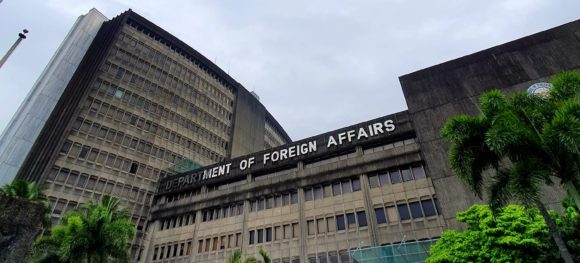
The commencement of a possibly lifelong career as a foreign service officer (FSO) merits an inaugural blog entry and a new chapter in this blog. Today marks the first month since I officially assumed my post as FSO in the Philippines’ Department of Foreign Affairs.
As with all career officers who undertake and pass the notorious foreign service exams, our lives as eligible diplomats start with six months of internship and then six months of cadetship, both in Manila. This freshman year of sorts is when we are expected to learn the ways of diplomacy, managing the country’s international relations, advancing its interests abroad, and looking after the well-being of Filipinos around the world.
I have thus been doing my internship with the Department since June 1, which hasn’t been that long at all. I have been detailed with the Maritime and Ocean Affairs Office, which handles the Philippines’ maritime, ocean and archipelagic policies in relation to other countries and international organizations. This includes matters ranging from the country’s maritime borders and territorial claims, to matters relating to ocean governance, shipping, marine scientific research, fishing, etc. For an archipelagic state whose very identity relies on its precise geographic character and its strategic maritime location, these matters are of primordial importance.