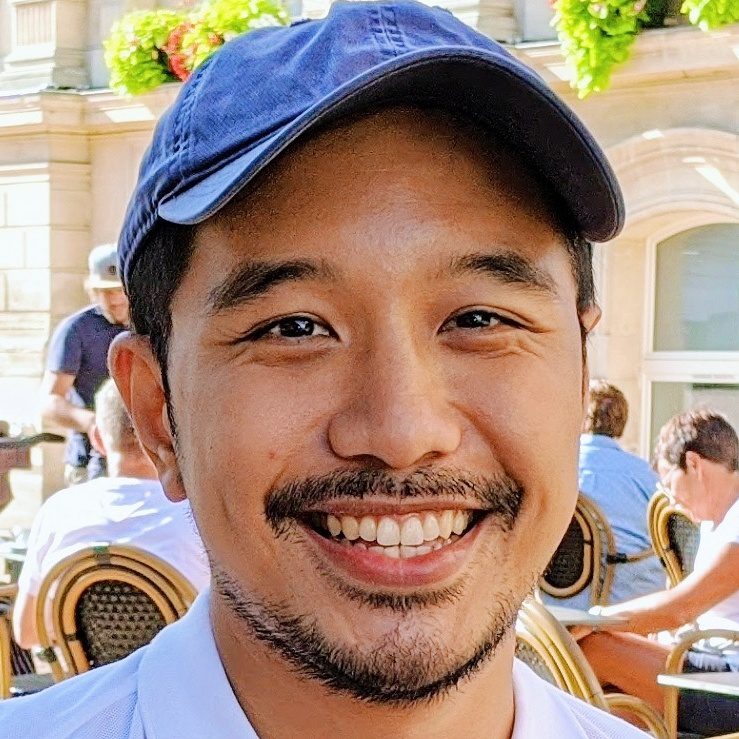

I have only been in Beijing for four months, but already the variety of work is evident. These are still early impressions, but they are shaping how I see my posting in this country.
Currently, I handle both the economic and assistance-to-nationals sections, and earlier I also covered the consular desk. My background in the maritime office in Manila means I still take on work related to the West Philippine Sea. A single day can shift from investment promotion to working on cases involving Filipinos in distress, from clearing visa applications to joining my principals in meetings at the foreign ministry when incidents at sea arise, and to parsing the flow of news between Beijing and Manila. On the busiest days, all of these happen one after another, sometimes all at once.
China, including Hong Kong, is the Philippines’ biggest trading partner and our largest buyer and supplier. Geography and existing circumstances make this trade relationship unavoidable. Much of what we use and consume comes through Chinese supply chains, most visibly in the machines that we use, the appliances and household items in our homes, and the food that reaches Filipino kitchens. Our balance of trade figures strongly suggest that a disruption would not be nearly as difficult on China as much as it would be on the Philippine economy. But this relationship is not only about dependence. Where others see imbalance, I see potential. Filipino jobs are tied to this connection, and there is space for our enterprises to prosper within it. Over the past months, I have joined efforts to promote Philippine tourism, services, and agriculture at trade fairs and investment forums. These events may seem routine, but to me they illustrate how Filipino products, ideas, and talent can find a place in China. At the same time, they show how Chinese investment can thrive in the Philippines, bringing capital, technology, and jobs if directed toward sectors that truly benefit our people.
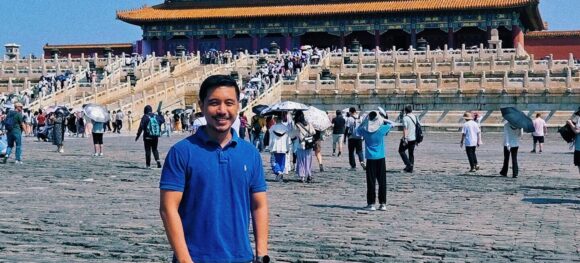
When I landed in Beijing in late May, the first thing that struck me was the heat. Dry, biting, and sharp on the skin. It’s not the heavy humidity of Manila, but a sting that prickles. I had braced for pollution, having been warned about air quality many times before I left. Instead, the skies were surprisingly clear and often cloudless. The avenues were not only long but also deliberately wide. Massive buildings of marble, concrete, and glass stood on both sides, heavy and imposing. They seemed to mirror the strict order and weight of the Chinese capital. Yet amid this hardness were plenty of trees, manicured lawns, and spring flowers, carefully arranged to soften the edges and remind me that even in this immense, unyielding city, appearances are deliberately managed. It was overwhelming, impressive, and impersonal all at once.
The language barrier was just as impermeable. Not being fluent (yet) in Mandarin, every signage and every document felt like a riddle. Even something as simple as figuring out what an establishment was for or deciphering product labels on food and appliances became an exercise in guesswork. Today I still find myself hesitating at shopfronts, unsure whether I am about to walk into a clinic, a massage parlor, or a shop selling something I have absolutely no use for. In the supermarket, I often worry that what I think is soy sauce might turn out to be vinegar or something I should not ingest. It is a constant reminder that adjusting here would take more than diplomatic training, it would demand daily patience and humility of the sort that reduces me to the turo-turo school of acting, pantomiming, and looking a little silly just to communicate simple needs and run errands.
My French residence permit expired today without me exercising the option to return to France, extend, or apply for citizenship. This puts a definite closure to a dream I once had of establishing a new and permanent life overseas.
Early this year, guided by a curious set of circumstances, I decided to return to the Philippines to take on a career in the Philippine foreign service. Up until yesterday, in the middle of a hectic workday, I was joking with my colleagues that I still had a few hours to spare and I could actually just pack up, take a spontaneous flight and get into Charles de Gaulle just before the 2nd of December ended and still be allowed entry with my valid card. Of course, I didn’t mean it, and my residence card is now ineffective.
Nanghihinayang ba ako? Short answer, no. Nuanced answer is still a no, but I admit reminiscing and fantasizing once in a while on what my life in France would have been had I stayed, pursued a career in Paris and applied for French citizenship this year. These fantasies recur especially during stressful moments at work and when confronted with the agony of living in Manila at times. But these are only fleeting moments of daydreaming.
Above and beyond this fantasy, I’ve decided that my life is worth more than just the pursuit of personal happiness. I wanted my life to be relevant. I’ve long realized that my life would be meaningful if it was in the service of something greater than myself or my immediate family. Fate did not endow me with the sum of my talents and experiences as Filipino the past three decades to live selfishly and obscurely based solely on my own terms and desires. Happiness, I now believe, follows if I pursue fulfillment first and foremost–beyond the day-to-day desire for personal comfort and delight. The career in the Philippine foreign service offered me a perspective beyond one, two, three years. It offered me the a sense of purpose based on a life of service and a sense of fulfillment with the prospect of unique adventures and challenges I don’t think I could get from any other career.
I can say with all sincerity that I am at peace with my decision, and I am looking forward to a lifelong career as a foreign service officer.
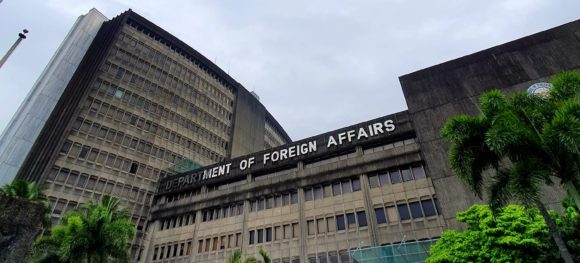
The commencement of a possibly lifelong career as a foreign service officer (FSO) merits an inaugural blog entry and a new chapter in this blog. Today marks the first month since I officially assumed my post as FSO in the Philippines’ Department of Foreign Affairs.
As with all career officers who undertake and pass the notorious foreign service exams, our lives as eligible diplomats start with six months of internship and then six months of cadetship, both in Manila. This freshman year of sorts is when we are expected to learn the ways of diplomacy, managing the country’s international relations, advancing its interests abroad, and looking after the well-being of Filipinos around the world.
I have thus been doing my internship with the Department since June 1, which hasn’t been that long at all. I have been detailed with the Maritime and Ocean Affairs Office, which handles the Philippines’ maritime, ocean and archipelagic policies in relation to other countries and international organizations. This includes matters ranging from the country’s maritime borders and territorial claims, to matters relating to ocean governance, shipping, marine scientific research, fishing, etc. For an archipelagic state whose very identity relies on its precise geographic character and its strategic maritime location, these matters are of primordial importance.
Note: This is a re-composed version of a series of tweets posted on the same date.
I have decided not to pursue pending job applications in Paris in order to take on my forthcoming appointment with the Philippines’ Department of Foreign Affairs. This also means I have decided to forego my chance for naturalization in France. Although many of you might think I am making a mistake, at the moment this is what feels right for me.
The two years I spent in France were among the best in my life and the prospect of re-doing my life, low-key and without a care in the world, with all the perks of ‘first world’ citizenship, far from all my profound frustrations in the Philippines was (and still is) so very appealing.
However, I realize that I want a deeper sense of purpose. A low-key private life as a citizen in Europe is a dream! But I also pine for sense of relevance in this world and all that’s happening. In the end, the question that lingered throughout my thought process was–what am I here for? The unique chance to be diplomat excites me. The pieces didn’t fall into place for me to ignore.
Note: This is a re-composed version of a series of tweets posted on the same date. It garnered quite some controversy after it was republished in a website without consent. But I’m nevertheless posting it here for posterity.
This year I have the choice to either enter the Philippine foreign service or start an application for French naturalization, since I technically become eligible this June. Divergent and significant life choices ahead, and the temptation is strong. The election results might play a significant role in my decision.
If you’re wondering how I am eligible so soon–the five (5) year residency requirement for an application for French citizenship is shortened to two (2) years after obtaining a masters degree from a French university. Well, that aside from other conditions of course, but at least I get to tick one major requirement this year. I can theoretically start the application this June because that would have been two years since I graduated from my first masters degree in Paris.